How Can Beer Brewing Equipment Help Improve Batch Consistency?
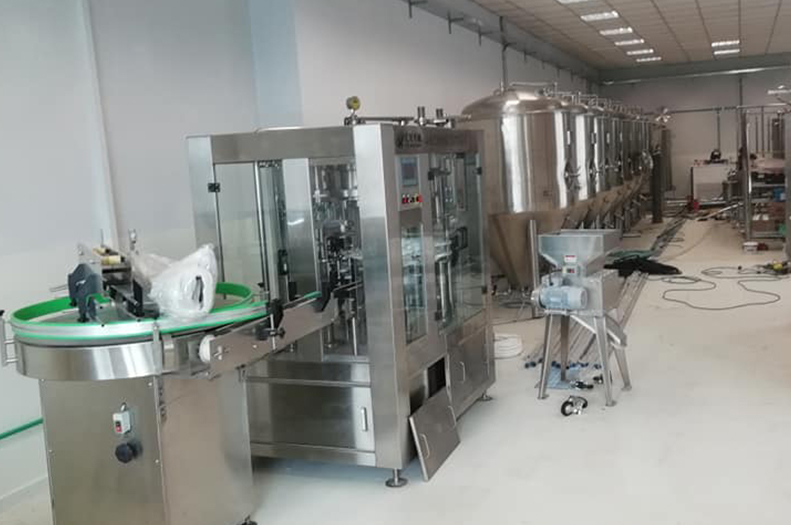
Beer brewing equipment improves batch consistency by controlling temperature, flow, pressure, oxygen exposure, volume, timing, and sanitation with measurable settings instead of operator estimates. A controlled mash can hold a target within about ±0.5°C, while calibrated flow meters and automated valves help keep transfer volumes within a defined range. Fermentation tanks with glycol cooling can maintain programmed temperature profiles, and pressure controls help stabilize carbonation. Brewers Association materials published through 2026 identify temperature, gravity, pH, dissolved oxygen, pressure, and conductivity as useful fermentation measurements. Proper equipment also creates batch records, so a brewer can compare 20, 50, or 100 batches and identify process differences.
Brewing consistency starts before fermentation because wort composition is shaped by every thermal and mechanical step. A brewhouse that gives the same recipe different mash temperatures, runoff rates, evaporation levels, or knockout volumes will also give yeast a different starting environment. Brewers Association quality resources emphasize measurements such as wort gravity, pH, temperature, oxygen, and fermentation performance when evaluating brewing processes.
A temperature-controlled mash system can reduce variation during enzymatic conversion. If a recipe targets 65°C and one batch reaches 66.5°C while another stays near 65°C, fermentability may change because enzyme activity is temperature dependent. A vessel with several temperature readings, controlled heating, and continuous recirculation gives the brewer more information than a single manual thermometer. For a 1,000-liter mash, even a 1% difference in retained water or extraction can change the wort volume and gravity entering the kettle.
A practical control target is to define the temperature range, hold time, and measurement point before brewing, then use the same settings for every batch.
The physical design of the mash vessel also affects repeatability. Recirculation helps reduce temperature differences between the upper and lower parts of the vessel, while a suitable agitator or mixing arrangement helps prevent localized heating. Commercial systems are often designed around repeatable flow rather than occasional manual adjustment. Over 10–20 consecutive batches, recording mash temperature at several points can show whether the displayed value represents the broader mash.
Boiling creates another set of measurable differences. Evaporation, kettle heating, circulation, and boil duration all affect wort concentration. Suppose a 2,000-liter pre-boil volume is reduced by 8% in one batch and 10% in another. The final volume differs by 40 liters before fermentation even begins. An automated heating controller can maintain a defined heating profile, while a flow meter and level sensor can help maintain consistent volume.
Hop additions also depend on timing and wort conditions. A dosing system that releases an addition at the programmed minute gives more repeatable timing than a brewer relying on a wall clock while managing several tasks. This becomes more useful when a brewery produces 3–6 brews per day and one operator has to watch multiple vessels.
| Process point | Useful equipment control | Example measurement |
|---|---|---|
| Mash | Temperature probe + control loop | 65°C target |
| Lautering | Variable-speed pump | Defined L/min |
| Boil | Controlled heating | Fixed boil duration |
| Knockout | Heat exchanger + flow control | Set outlet temperature |
| Fermentation | Glycol jacket + sensor | Programmed °C profile |
| Packaging | Pressure + DO measurement | Package DO target |
The same principle applies to wort transfer. Pump speed and pipe geometry affect flow rate, shear, foaming, and the time required to move wort between vessels. A variable-speed pump allows the brewery to set a repeatable flow rather than depend on how far an operator opens a valve. If the same transfer volume is moved at similar rates across 30 batches, production records become much easier to compare.
Heat exchangers add another layer of control because yeast should receive wort at a suitable pitching temperature. White Labs identifies fermentation temperature, pitch rate, and dissolved oxygen as three cold-side variables that influence fermentation performance and flavor. Its December 2025 guidance notes that large temperature changes around knockout can affect yeast performance and fermentation timing.
Fermentation tanks often provide the largest improvement because biological activity produces heat that changes throughout the fermentation cycle. A glycol-jacketed tank with a calibrated sensor can reduce temperature drift by continuously adjusting cooling. For example, instead of relying on room temperature, a brewer can program 18°C for primary fermentation and a later rise of 2–4°C for maturation. The actual profile can then be recorded and compared across batches.
Brewers Association guidance on diacetyl recommends healthy fermentation conditions, sufficient wort nutrients, and appropriate yeast pitching. It cites a typical pitching range of 0.5–1.5 × 10⁶ cells/mL/°P and suggests a temperature rise of about 2–8°F after roughly 50–60% of apparent extract has been consumed for a VDK rest. Equipment cannot replace yeast management, but accurate tanks, sensors, and dosing equipment make those conditions easier to reproduce.
Yeast handling equipment adds another control point. A brewery may use a sanitized yeast brink, dedicated transfer lines, temperature-controlled storage, and measured pitching volumes. If 10 fermentation batches receive substantially different yeast quantities, fermentation speed and flavor can vary even when the wort is identical. Recording yeast generation, viability, pitching quantity, wort gravity, and temperature gives the brewer a consistent set of inputs for comparison.
Dissolved oxygen requires similar attention. Oxygen is useful before fermentation because yeast needs it for healthy growth, but oxygen pickup after fermentation is undesirable for beer freshness. Brewers Association resources published in 2023 and 2026 discuss oxygen monitoring and the use of instrumentation alongside sensory assessment. Its packaging guidance recommends keeping package dissolved oxygen below 50 ppb as a quality target and checking total package oxygen at the start of every packaging run.
Equipment affects oxygen exposure through tank geometry, fittings, pumps, seals, transfer methods, and purging procedures. A closed transfer system with properly sealed connections is easier to standardize than an open transfer. For a brewery filling 5,000 cans in one run, even a small increase in oxygen exposure across the transfer and packaging stages can affect many units. A calibrated DO meter gives the brewer an actual reading instead of relying only on taste.
Carbonation also depends on temperature and pressure. Brewers Association draught guidance gives an example in which beer at 38°F and 11 psi holds about 2.5 volumes of CO₂; at the same 11 psi but 42°F, the listed carbonation falls to about 2.3 volumes. This relationship shows why tank temperature and pressure need to be treated as linked settings. A pressure-rated brite tank, accurate gauge, temperature sensor, and carbonation system can keep those conditions within the brewery's defined range.
Cleaning equipment affects repeatability before the next batch even starts. A CIP system can control caustic concentration, temperature, circulation time, rinse duration, and sanitizing conditions. Instead of a brewer manually estimating whether a vessel was cleaned for 20 or 30 minutes, a programmed cycle can record a defined process for every tank. Brewers Association quality materials include sanitation performance, residual chemicals, pH testing, and contamination checks as part of brewery quality work.
Sanitary design matters alongside automation. Weld quality, drainability, valve selection, gasket condition, pipe routing, and internal surface finish all affect how easily a system can be cleaned. A line that retains 2–3 liters of beer after transfer can introduce residue into the next production cycle if it is not properly drained and cleaned. Properly designed piping reduces these retained volumes and makes cleaning procedures more repeatable.
Measurement equipment completes the system. Temperature probes, pressure gauges, flow meters, scales, pH meters, dissolved oxygen meters, and densitometers all need suitable calibration intervals. During a 2026 Brewers Association technical program, wort gravity was compared using hydrometers, densitometers, and refractometers with n = 3 samples, illustrating that different measurement methods can produce different readings. A brewer who compares batches using different instruments without standardization can mistake measurement variation for brewing variation.
A batch record can therefore contain a relatively small group of numbers:
-
Mash temperature: 65.0°C
-
Mash duration: 60 minutes
-
Pre-boil gravity: recorded value
-
Post-boil volume: recorded liters
-
Knockout temperature: recorded °C
-
Fermentation setpoint: recorded °C
-
Pitching rate: cells/mL/°P
-
Peak fermentation pressure: recorded psi
-
Package DO: target in ppb
After 20–30 batches, these records provide enough production history to compare normal ranges with unusual results. Brewers Association resources in 2026 specifically discuss data-driven fermentation monitoring, including gravity, pH, temperature, pressure, dissolved oxygen, and conductivity.
Brewing Equipment can bring these controls into one operating system. A brewery can connect brewhouse temperature sensors, pumps, valves, fermenter cooling, pressure measurement, and data logging so that a recipe contains defined operating settings. For a 1,000-liter system or a 20,000-liter production system, the principle remains the same: measure the process, establish acceptable ranges, and reproduce the same conditions.
The equipment package can be selected around the brewery's batch size and process. A brewery producing 500-liter batches may gain more from accurate temperature control and sanitary transfer hardware, while a facility producing 10,000 liters per batch may need automated flow control, larger glycol capacity, centralized CIP, and integrated data recording. The system should be sized around actual heating, cooling, pumping, and cleaning requirements rather than tank volume alone.
For breweries evaluating equipment, the most useful questions are measurable: Can the mash stay within the intended temperature range? Can the system repeat wort volume within a defined tolerance? Can fermentation temperature be recorded continuously? Can pressure be controlled within the tank's rated limits? Can oxygen be measured below the brewery's package specification? Can the same CIP cycle be repeated and documented across 50 or 100 batches?
A well-designed brewery process turns these questions into equipment specifications. When temperature, flow, pressure, oxygen, volume, yeast quantity, and cleaning parameters are measured with the same instruments and procedures across 20, 50, or 100 batches, the brewer has a much stronger basis for producing beer with similar gravity, attenuation, carbonation, flavor, and package performance from one batch to the next.